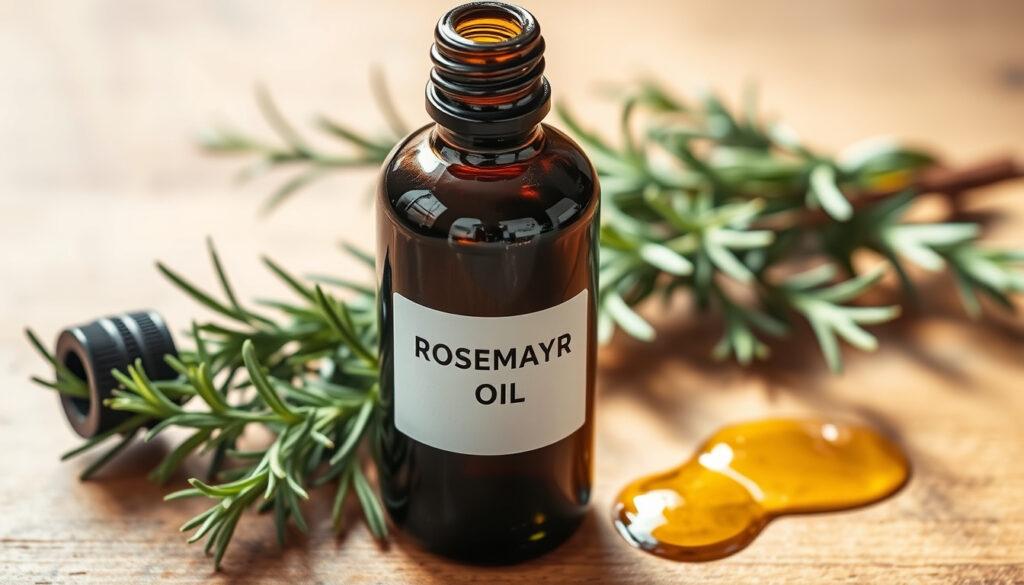
Rosemary Oil for Hair: Benefits, How to Use, and Side Effects
If you’ve been searching for a natural way to support hair growth, rosemary oil has likely crossed your radar. The herb that seasons your roast potatoes is now a staple in many hair care routines—and early research backs some of the enthusiasm. A 2015 clinical trial found that rosemary oil matched 2% minoxidil in hair count increase over six months (PubMed / Skinmed). By the end of this guide, you’ll have a clear routine and know what the evidence actually says.
Studies on rosemary oil for hair growth: 20+ peer-reviewed papers ·
Clinical effectiveness compared to minoxidil (2015 study): equivalent after 6 months ·
Recommended frequency of use: 2–3 times per week ·
Key active compound: rosmarinic acid ·
Average time to see visible results: 3–6 months ·
Common carrier oils for dilution: coconut, jojoba, argan
Quick snapshot
- Stimulates blood circulation to the scalp (Medical News Today)
- Antioxidant protection for hair follicles (WebMD)
- May reduce androgenetic alopecia progression (PubMed) (Medical News Today)
- Improves scalp health and dandruff (WebMD) (Medical News Today)
- Dilute with carrier oil (coconut, jojoba, argan) (Healthline)
- Massage into scalp for 5 minutes (Hims)
- Leave in 30 minutes to overnight (WebMD) (Healthline)
- Rinse with mild shampoo (Healthline) (Healthline)
- Skin irritation if undiluted or overused (WebMD) (American Academy of Dermatology)
- Allergic reactions possible (patch test) (Medical News Today) (American Academy of Dermatology)
- Avoid if prone to seizures (high camphor content) (Healthline) (American Academy of Dermatology)
- Consult dermatologist if pregnant or breastfeeding (American Academy of Dermatology)
- Rosemary oil vs minoxidil: similar efficacy in studies (PubMed)
- Fewer systemic side effects than finasteride (Healthline)
- Best used as part of a comprehensive hair care routine (American Academy of Dermatology)
- Results visible after 3–6 months of consistent use (WebMD)
Six key facts about rosemary oil for hair, one pattern: scientific support is strongest for circulation and anti-inflammatory action.
| Attribute | Details |
|---|---|
| Main benefit | Promotes hair growth and reduces shedding |
| Application method | Topical, diluted with carrier oil |
| Recommended frequency | 2–3 times per week |
| Common carrier oils | Coconut, jojoba, argan, sweet almond |
| Scientific backing | Multiple human studies, including a 2015 RCT |
| Average onset of results | 3–6 months |
Does Rosemary Oil Help in Hair Growth?
What scientific studies support rosemary oil for hair growth?
- A 2015 randomized trial involving 100 participants with androgenetic alopecia found that rosemary oil and 2% minoxidil both significantly increased hair count at 6 months (PubMed / Skinmed).
- The mechanism is linked to improved scalp circulation, antioxidant activity from rosmarinic acid, and anti-inflammatory effects (Medical News Today).
- Animal studies suggest rosemary oil may inhibit dihydrotestosterone (DHT) binding, though human data is limited (Healthline).
How does rosemary oil compare to minoxidil?
In the same 2015 study, rosemary oil performed as well as 2% minoxidil in hair count improvement. Notably, participants using rosemary oil reported significantly less scalp itching than the minoxidil group (PubMed / Skinmed). However, minoxidil is FDA-approved for hair loss (Mayo Clinic), while rosemary oil is not (Hims).
For someone with mild androgenetic alopecia seeking a natural alternative, rosemary oil offers comparable first-line efficacy to minoxidil with less irritation—but it lacks the regulatory stamp and long-term safety data.
The implication: rosemary oil is a reasonable first step for those who prefer natural options, but it is not a replacement for proven medical therapies in advanced hair loss.
How Do You Use Rosemary Oil on Your Hair?
How to apply rosemary oil to the scalp
- Perform a patch test on a small skin area 24 hours before first use (WebMD).
- Mix 2–3 drops of rosemary essential oil with 1 tablespoon of carrier oil (coconut, jojoba, or argan) (Healthline).
- Apply to the scalp, not the hair shaft, focusing on thinning areas (WebMD).
- Massage gently for 5 minutes to stimulate circulation (Hims).
- Leave on for at least 30 minutes or overnight. Rinse with a mild shampoo (Healthline).
Should you apply to wet or dry hair?
Application on dry hair is recommended because the oil absorbs better without water dilution. If applied to wet hair, the oil may slide off the scalp (WebMD).
Never apply undiluted essential oil directly to the scalp—it can cause chemical burns. A 2–3% dilution is the safe ceiling (ArtNaturals).
The pattern: consistency matters more than intensity—using rosemary oil three times a week for at least three months is the minimum to judge effectiveness.
How Long Should You Leave Rosemary Oil in Your Hair?
Optimal duration for different hair types
- Fine hair: 30 minutes to 1 hour to avoid greasiness (WebMD).
- Thick or curly hair: up to 2 hours or overnight for deeper absorption (Healthline).
- Overnight use is generally safe if properly diluted, but may cause irritation for sensitive scalps (Medical News Today).
Should you rinse out rosemary oil or leave it overnight?
Rinsing after 30–120 minutes is standard. Leaving it overnight can boost absorption but increases the risk of clogged pores or folliculitis (Hims).
The trade-off: longer exposure means more potential benefit but also more irritation risk. Start with short durations.
What Happens If I Put Rosemary Oil on My Hair Every Day?
Can daily use cause irritation or scalp sensitivity?
Daily application may trigger contact dermatitis, redness, or itching, especially if the oil is not correctly diluted (WebMD). The essential oil concentration adds up with repeated use, increasing the risk of scalp sensitivity (Medical News Today).
Is daily application more effective for hair growth?
No conclusive evidence shows that daily use outperforms a 2–3 times per week routine. One source notes that daily use may help but also warns that evidence is limited (GoodRx). The risk of overuse includes folliculitis and unnecessary product waste.
A user who applies rosemary oil every day expecting faster results may instead end up with an irritated scalp that halts treatment entirely. The evidence supports moderate, consistent use over aggressive frequency.
The catch: daily use adds no proven growth advantage but increases side-effect risk. Stick to 2–3 times per week.
What Is the Disadvantage of Rosemary Oil for Hair?
Side effects and who should avoid it
- Skin irritation and redness from undiluted oil (WebMD)
- Allergic reactions possible in individuals with pollen allergies (Medical News Today)
- Not recommended for people with epilepsy due to camphor content in high doses (Healthline)
- Avoid contact with eyes (WebMD)
- Consult a dermatologist if pregnant or breastfeeding (American Academy of Dermatology)
Upsides
- Natural, widely available, affordable
- Backed by a clinical trial showing comparable efficacy to minoxidil
- Less scalp irritation than minoxidil in head-to-head study
- Can be used as part of a broader hair care routine
Downsides
- Not FDA-approved for hair loss
- Requires consistent use for 3–6 months to see results
- Dilution error can cause burns or irritation
- Limited research on long-term safety beyond 6 months
The trade-off: rosemary oil offers a natural entry point with a decent evidence base, but it demands patience and careful application. It’s not a quick fix.
What Are the Big 3 for Hair Regrowth?
Comparison of efficacy: minoxidil, finasteride, rosemary oil
Three treatments dominate the hair loss conversation—here’s how they compare on key criteria.
| Criterion | Rosemary Oil | Minoxidil (topical) | Finasteride (oral) |
|---|---|---|---|
| Efficacy evidence | One RCT shows non-inferiority to 2% minoxidil at 6 months (PubMed) | Multiple RCTs support efficacy for androgenetic alopecia (Mayo Clinic) | Multiple RCTs show DHT reduction and hair regrowth (Healthline) |
| Side effect profile | Scalp irritation if undiluted; generally well tolerated (WebMD) | Scalp irritation, itching, initial shedding (Mayo Clinic) | Sexual side effects, depression risk (Healthline) |
| Regulatory status | Not FDA-approved for hair loss (Hims) | FDA-approved for OTC use (Mayo Clinic) | FDA-approved for prescription use (Healthline) |
The pattern: rosemary oil fills a niche as a natural alternative with fewer systemic risks, but it cannot match the regulatory backing and long-term data of minoxidil or finasteride. For many users, the best approach may combine rosemary oil with a dermatologist-led plan (American Academy of Dermatology).
Confirmed facts
- Rosemary oil improves scalp blood flow (Medical News Today)
- Contains anti-inflammatory and antioxidant compounds (WebMD)
- One clinical trial shows non-inferiority to minoxidil (PubMed)
- Safe for topical use when properly diluted (Healthline)
What’s unclear
- Optimal frequency and duration for best hair growth outcomes (GoodRx)
- Long-term efficacy beyond 12 months (Medical News Today)
- Efficacy for different hair loss types (telogen effluvium vs androgenetic alopecia) (Hims)
- Synergy with other treatments (microneedling, supplements) (Healthline)
“In a 2015 randomized comparative trial, rosemary oil was shown to be as effective as 2% minoxidil for the treatment of androgenetic alopecia.”
— Dr. Sanusi Umar, dermatologist and lead author of the study (PubMed)
“Rosemary oil can be applied once a day and may take two to three months to see results. It’s applied to the scalp rather than the hair shaft.”
— WebMD health editorial team (WebMD)
“The American Academy of Dermatology advises that hair loss treatments are not all the same and recommends seeing a board-certified dermatologist to identify the cause before treatment.”
— American Academy of Dermatology (American Academy of Dermatology)
For anyone in Ireland considering rosemary oil as a hair loss option, the decision is clear: start with a patch test, dilute properly, and commit to a 3–6 month trial while monitoring progress. If after that period you see no improvement, or if your hair loss is advanced, consult a dermatologist before reaching for stronger pharmaceutical options.
For a detailed comparison of application methods and expected results, see this comprehensive guide on rosemary oil for hair growth.
Frequently asked questions
Can rosemary oil be used on colored hair?
Yes, rosemary oil is generally safe for colored hair. Apply it to the scalp, not the lengths, to avoid affecting color treatment (WebMD).
Does rosemary oil help with dandruff?
Rosemary oil has antimicrobial and anti-inflammatory properties that may reduce dandruff and scalp inflammation (WebMD).
Can you ingest rosemary oil for hair benefits?
No. Ingesting essential oils can be toxic. Only use rosemary oil topically and diluted (Healthline).
What is the best time of day to apply rosemary oil?
Evening is often preferred so the oil can absorb during sleep, but any consistent time works. Wash out in the morning if leaving overnight (Hims).
Can rosemary oil be used together with minoxidil?
Yes, but apply them at different times of day to avoid irritation. Consult a dermatologist before combining treatments (American Academy of Dermatology).
How to store rosemary oil for hair?
Store in a cool, dark place away from sunlight. Keep the bottle tightly closed to preserve potency (WebMD).
Does rosemary oil cause hair shedding initially?
No documented initial shedding phase unlike minoxidil. If shedding occurs, stop use and consult a dermatologist (Medical News Today).
Can men and women use rosemary oil the same way?
Yes, the application method is the same for both sexes. Women who are pregnant or breastfeeding should check with their doctor first (American Academy of Dermatology).
More related posts
 What Do Hemorrhoids Look Like? Pictures Symptoms Types
 Recipe for Banana Bread: Easy Moist Loaf with Pro Tips
 Boys Haircuts Long on Top: Popular Styles & Clipper Sizes
 Galaxy S21 Ultra to Buy – Best Deals and Prices 2025
 We t Prince Funeral Home: St. Loui PEI Service & Obituarie
 Cast of St. Denis Medical: Actors, Characters & Guests
 Canadian Tire Hudson Bay: Assets, Products & Ownership
 Jagmeet Singh News Today: TikTok, Health & NDP
