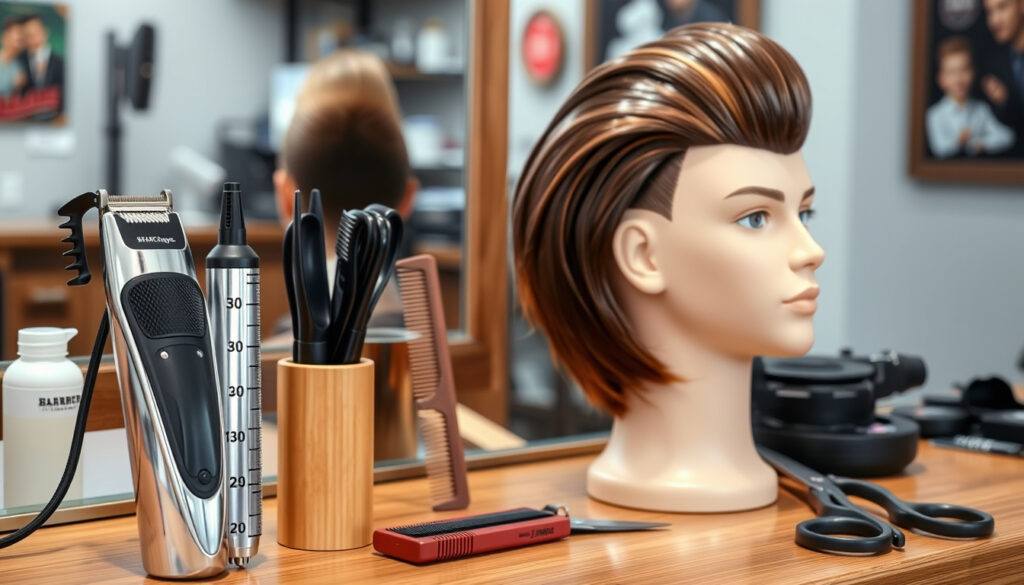
Boys Haircuts Long on Top: Popular Styles & Clipper Sizes
If you’ve ever stood behind a barber chair with your son, you know the struggle: translating “something cool, but not too short” into actual clipper numbers. The boys haircuts long on top trend isn’t just a style — it’s a whole language of guard sizes, fade techniques, and the infamous 3:2:1 rule, and this guide breaks down the most popular cuts and the barber terminology you need to get the look right every time.
Gen Z boy haircut nickname: Broccoli cut ·
No. 2 clipper length: 1/4 inch (6 mm) ·
No. 4 clipper length: 1/2 inch (13 mm) ·
3:2:1 haircut rule concept: Proportional lengths for top, sides, back
Quick snapshot
- Broccoli cut is the most recognized Gen Z boy haircut (Wikipedia (user-contributed encyclopedia))
- No. 2 clipper guard leaves 1/4 inch hair (Wahl Professional (clipper manufacturer))
- No. 4 clipper guard leaves 1/2 inch hair (Wahl Professional (clipper manufacturer))
- Exact origin of the 3:2:1 haircut rule – no verified source found
- Whether the seven day rule is based on hair growth rate or conventional wisdom
- Rise in popularity of long-on-top styles from 2020 onward (Latest-Hairstyles.com (hairstyle gallery))
- More textured, personalized variations expected (e.g., wolf cut, shagglet)
Four key facts, one pattern: clipper numbers and proportion rules are the backbone of every popular long-on-top cut.
| Label | Value |
|---|---|
| Gen Z haircut name | Broccoli cut |
| No. 2 guard length | 1/4 inch |
| No. 4 guard length | 1/2 inch |
| 3:2:1 rule meaning | Top 3 in, sides 2 in, back 1 in (approx.) |
What is the most popular boy haircut right now?
Gen Z favorites: the broccoli cut
The haircut that has come to define Gen Z boys is informally known as the “broccoli cut” — a term that originated from internet memes and entered mainstream vocabulary (Wikipedia (user-contributed encyclopedia)). Characterized by a full, rounded top and faded sides, it suits all hair types and is often styled with light pomade for a textured finish. According to barbering guides, the taper fade is a key technique used to create the smooth transition from long top to short sides (BarberPros (barber education resource)).
Other trending long-on-top styles
- Textured crop: a low-maintenance style that works well for thicker hair (Vagazine (haircut guide)).
- Side-swept fade: keeps the top longer while the sides are short and neat, creating a school-appropriate look (Vagazine (haircut guide)).
- Curtain bangs: typically worn with a middle part and longer front sections framing the face (Vagazine (haircut guide)).
- Long top fade: generally described as growing out more gracefully than sharply disconnected cuts (Vagazine).
The implication: while the broccoli cut dominates headlines, the real variety comes from understanding how clipper numbers and fade techniques can be adapted to any boy’s hair type.
Parents should focus on the silhouette — long top, short sides — rather than a specific name. Barbers can adjust the fade height and top length to match the child’s face shape and hair texture.
The pattern: Learning the basic clipper numbers and fade terms turns a confusing barber visit into a clear conversation.
What are popular long haircuts for boys?
Long on top, short on sides (taper fade)
The classic boys’ long-on-top look is often styled as a long top with short faded or tapered sides (Vagazine). This category includes the broccoli cut, textured crop, and side-swept fade. A fade can be created with clipper guard sizes that step down incrementally, commonly discussed in barber education as a progression rather than a fixed universal formula (YouTube barber education video).
Messy textured top
For a more relaxed look, a messy textured top works well with medium to thick hair. The Salon Guy tutorial on longer men’s hair emphasizes sectioning and keeping length connected for a beachy textured look (TheSalonGuy YouTube). A fringe with tapered sides is commonly recommended for straight or slightly wavy hair in teen hairstyle videos (YouTube hairstyle video).
Straight hair long on top
Straight hair benefits from styles that add volume through blow-drying and layering. The K-pop inspired layer shag is a medium-to-long haircut with feathered layers and wispy ends (Latest-Hairstyles.com). A bro flow works especially well for medium to thick hair and is easy to grow out (Latest-Hairstyles.com).
What this means: straight hair doesn’t limit options — but it does require different styling products (light pomade or sea-salt spray) than curly hair needs to hold shape.
What is the Gen Z boy haircut called?
The broccoli haircut
The “broccoli haircut” is the informal name for the Gen Z boy haircut, characterized by a full, rounded top and faded sides (Wikipedia). The term originated from internet memes comparing the shape to a broccoli floret and has since entered mainstream barber vocabulary. According to barbering sources, the taper fade technique is integral to achieving the smooth transition from the longer top to the shorter sides (BarberPros).
Other Gen Z terms (e.g., ‘zoom mullet’)
Less common but still trending: the “shagglet cut” is a hybrid between a shag and a mullet (Latest-Hairstyles.com). The choppy wolf cut for boys is a trendy, rugged style with choppy layers and a tousled look (Latest-Hairstyles.com). These variations show that Gen Z boys are experimenting beyond the classic broccoli silhouette.
The takeaway: the broccoli cut is the starting point, but the language of boys’ haircuts is constantly evolving — and barbers are keeping up.
What is the 3:2:1 rule for haircuts?
How the 3:2:1 rule works
The 3:2:1 rule is used informally by some barbers to describe a simple fade progression from a longer guard to a shorter guard (TikTok barber education post). It suggests 3 inches on top, 2 inches on sides, 1 inch on back (or a variation of those proportions). However, Wahl Professional states that guard sizes indicate the approximate hair length left after cutting, not a precise universal length across all clippers (Wahl Professional). Many professional fade tutorials instead teach a 2-1-0 or lever-based blend.
Applying the rule to boys’ long-on-top cuts
For boys, the 3:2:1 rule can be used as a guideline for barber communication. If a parent asks for a “3:2:1 fade,” the barber will understand the desired proportional length distribution. But the actual guard numbers may vary depending on the clipper brand and the lever position. Barbering sources commonly treat guard numbers as approximate tools (Wahl Professional).
The catch: the 3:2:1 rule is a handy shorthand, but it’s not a universal standard. For a precise cut, trust your barber’s judgment over rigid numbers.
If you walk into a barbershop and ask for a 3:2:1, many barbers will know what you mean — but some will use a 2-1-0 or lever blend instead. The rule is a communication tool, not a guarantee.
The pattern: Proportion rules help parents talk to barbers, but the real skill lies in the barber’s adjustment for hair type and face shape.
What is a no. 2 haircut?
Clipper guard sizes explained
Clipper guards are numbered according to the length of hair they leave after cutting. A no. 2 clipper guard leaves hair 1/4 inch long; a no. 4 guard leaves 1/2 inch (Wahl Professional). These sizes are commonly used for faded sides in boys’ long-on-top haircuts. The taper fade itself is a haircut technique that gradually reduces hair length from longer on top to shorter on the sides and back (BarberPros).
No. 2 vs. No. 4 for boys’ sides
- No. 2: leaves 1/4 inch — creates a very short, neat side that contrasts sharply with longer top hair.
- No. 4: leaves 1/2 inch — gives a longer, softer transition that works well for boys with straight hair who want less contrast.
Wahl Professional emphasizes that guard sizes are approximate; the actual length depends on clipper brand and lever position (Wahl Professional). For fading, barbers often step down through several guards (e.g., No. 4 to No. 2 to No. 1) or use lever adjustments for a seamless blend.
The pattern: the lower the guard number, the shorter the side. For a classic long-on-top look, sides between No. 2 and No. 4 are the sweet spot.
What is the seven day haircut rule?
The waiting period before a new cut
The seven day rule advises waiting a week after a bad haircut before fixing it (TikTok barber education post). This allows hair to settle and reduces the chance of over-cutting. The rule is widely shared among barbers and on social media, but its origin is unclear.
Why seven days is recommended
- Hair grows roughly 1/8 to 1/4 inch per week, giving the barber more to work with.
- It reduces emotional decision-making — a cut that looks bad on day one often improves after a few days of styling.
- Over-cutting can lead to uneven lengths, especially with fades.
The trade-off: if the cut is genuinely messed up (e.g., a bald spot or uneven line), waiting seven days may not help. In those cases, a professional barber can often fix the issue sooner.
The implication: Use the seven-day rule as a cooling-off period, not a rigid deadline.
Confirmed facts vs. what remains unclear
Confirmed facts
- Broccoli cut is the most recognized Gen Z boy haircut (Wikipedia)
- No. 2 clipper guard leaves 1/4 inch hair (Wahl Professional)
- No. 4 clipper guard leaves 1/2 inch hair (Wahl Professional)
What’s unclear
- Exact origin of the 3:2:1 haircut rule – no verified source found
- Whether the seven day rule is based on hair growth rate or conventional wisdom
- Whether the “broccoli cut” term came from a specific meme or just general internet use
- Whether the 50 cool long haircuts list from Latest-Hairstyles.com is comprehensive for 2026 – listed from a hairstyle gallery, not an authoritative source
Expert perspectives and social media insights
“The broccoli cut is a popular style among Gen Z boys, characterized by a full, rounded top and faded sides.”
“The 3:2:1 rule is used informally by some barbers to describe a simple fade progression from a longer guard to a shorter guard.”
“Guard sizes indicate the approximate hair length left after cutting, not a precise universal length across all clippers.”
“The taper fade haircut gradually reduces hair length from longer on top to shorter on the sides and back.”
These four perspectives — from Wikipedia, TikTok barbers, a clipper manufacturer, and a barber education site — show the range of sources informing today’s boys haircuts long on top trend.
Stakeholder implications
For parents navigating the barbershop with a son who wants a trendy long-on-top cut, the practical takeaway is clear: learn the clipper numbers (No. 2 for short sides, No. 4 for medium sides) and mention the 3:2:1 rule as a communication tool. For barbers, the opportunity is to educate clients about the limitations of guard sizes and the importance of lever adjustments for a true fade. The social media ecosystem around haircuts — from TikTok tutorials to Wikipedia entries — continues to shape expectations, but the real expertise remains in the hands of a skilled barber who understands hair type, face shape, and the client’s willingness to style at home.
Frequently asked questions
How often should a boy get a haircut to maintain a long-on-top style?
Every 4–6 weeks to keep the sides short and the top shape intact. Growth patterns vary, so monitor the fade and book accordingly.
What hair products keep a boy’s long top hair in place without stiffness?
Light pomade, sea-salt spray, or a matte clay. Avoid heavy gels that make straight hair look greasy or curl patterns too crunchy.
Is a fade the same as a taper for the sides?
No. A taper gradually shortens hair from top to bottom; a fade goes shorter — often to skin — at the bottom. Both work for long-on-top styles, but a fade creates more contrast.
Can a boy with straight hair pull off the broccoli cut?
Yes — with the right cut and styling. Use a blow-dryer to add volume and a light product to create texture. The rounded shape is achievable even with straight hair.
What clipper number should I use for the sides of a long-on-top haircut?
No. 2 (1/4 inch) for a short fade; No. 4 (1/2 inch) for a softer transition. Ask your barber to blend between guards for a seamless look.
How do I describe a messy long-on-top cut to a barber?
Say: “I want the top long — about 3–4 inches — and the sides faded down to a No. 2. Style it with a messy texture, like a textured crop or broccoli cut.”
Does the 3:2:1 rule work for curly hair too?
Yes, but the proportions may need adjustment because curly hair shrinks as it dries. Ask for a longer top length (3.5–4 inches dry) to compensate.
More related posts
 Detroit Lions Game Today – Offseason Update & 2025 Recap
 Galaxy S21 Ultra to Buy – Best Deals and Prices 2025
 Chest Pain Left Side: Causes, Symptoms & When to Worry
 Godfather of Harlem Characters – Complete Cast List and Guide
 Teenage Mutant Ninja Turtles: Names, Colors, Movies & History
 Coloring Sheets for Kids – Free Printables by Theme and Age
 YWG Airport to San José del Cabo: Flights, Taxis & Shuttles
 iPhone 17 Release Date: Official 2025 Launch Details
