National Day for Truth and Reconciliation: Meaning, History & Observance
Every September 30, orange shirts appear across Canada like a quiet reminder that healing requires more than good intentions. The National Day for Truth and Reconciliation, born from decades of advocacy and tragedy, marks an official moment for Canadians to sit with a difficult history — and decide what comes next. This article traces how that day came to exist, what it means for different workers across the country, and how the movement behind it continues to shape conversations about reconciliation.
Date: September 30 annually · Established: 2021 by Government of Canada · Also known as: Orange Shirt Day · Federal status: Statutory holiday for federal employees · Purpose: Honours residential school Survivors
Quick snapshot
- NDTR became federal statutory holiday on September 30, 2021 (Goldblatt Partners)
- Bill C-5 received royal assent on June 3, 2021 (Wikipedia)
- There were 140 federally run residential schools operating from 1867 to 1996 (Government of Canada)
- Orange Shirt Day first observed in 2013 (BC Government)
- TRC issued 94 Calls to Action in 2015, including Call 80 for statutory holiday (Government of Canada)
- September 30, 2025 observance will be the fifth annual recognition
- Advocacy continues for broader provincial adoption in remaining jurisdictions
This table summarizes the essential details of the National Day for Truth and Reconciliation as established by the Government of Canada.
| Label | Value |
|---|---|
| Official Date | September 30 |
| Year Started | 2021 |
| Governing Body | Government of Canada |
| Alternate Name | Orange Shirt Day |
| Stat Holiday Scope | Federal employees |
What is the meaning of National Day for Truth and Reconciliation?
The National Day for Truth and Reconciliation honours the survivors, families, and communities affected by Canada’s Indian residential school system. Observed annually on September 30, the day recognizes the lasting inter-generational impacts of a policy that separated Indigenous children from their families and cultures. The Government of Canada describes it as a time to reflect on “the history that Indigenous peoples endured in residential schools” and to acknowledge “the work that remains to heal and to continue to build an inclusive society.”
Connection to residential schools
From 1867 to 1996, 140 federally run residential schools operated across Canada under a policy the Truth and Reconciliation Commission called “cultural genocide.” The TRC, which ran from 2008 to 2015 and issued 94 Calls to Action, documented the forced removal of children, the suppression of Indigenous languages, and the physical and emotional abuse that survivors experienced. Call to Action 80 specifically called on the federal government to establish a statutory holiday to honour those affected by this system.
Honouring Survivors and families
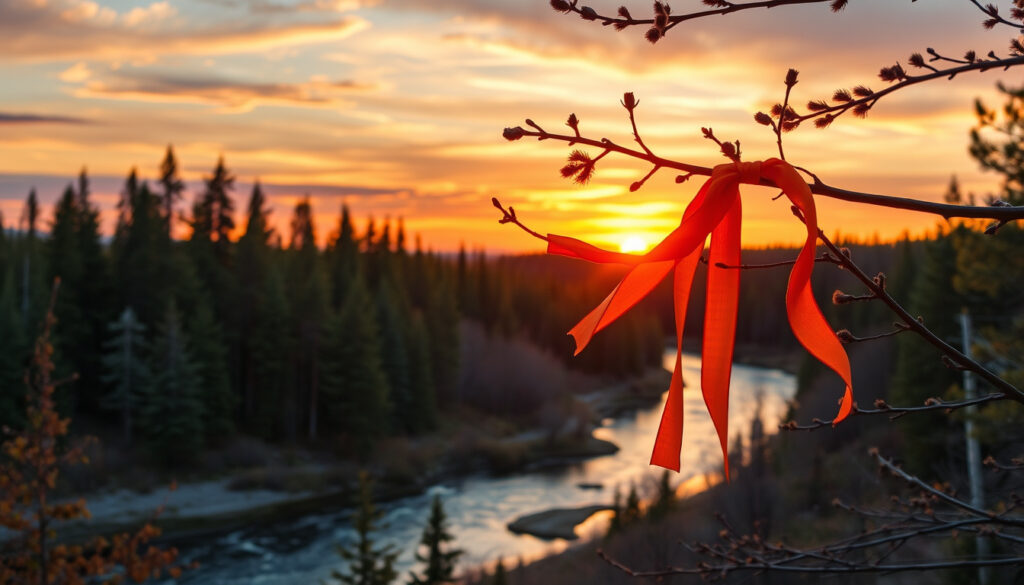
The day carries particular significance for First Nations, Inuit, and Métis peoples whose ancestors attended residential schools. For many families, September 30 is not just a holiday but an act of witness — a recognition that their grief is official, their history is acknowledged, and their experiences matter to all Canadians. The orange shirt, which originated as a symbol of resistance and loss, has become the visible marker of solidarity that anyone can wear to show they are paying attention.
How did the National Day of Truth and Reconciliation come to be?
The path from grassroots observance to federal statutory holiday took nearly a decade of advocacy, legislative attempts, and one devastating announcement that accelerated everything. Understanding the timeline reveals how long Indigenous advocates worked for this recognition before it finally arrived.
Truth and Reconciliation Commission calls to action
When the Truth and Reconciliation Commission released its final report in 2015, it included 94 Calls to Action addressing justice, education, health, and language — areas where the commission determined Canada had fallen short. Call to Action 80 specifically stated: “We call upon the federal government, in collaboration with Aboriginal peoples, to establish, as a statutory holiday, a National Day for Truth and Reconciliation to honour Survivors, their families, and communities.” The wording was clear: honour, not just observe.
The commission called for this day to be more than a symbolic gesture — it wanted structural recognition that would give Canadians time to reflect and participate in reconciliation activities.
Government declaration in 2021
The legislative journey included an earlier attempt: Georgina Jolibois, then a New Democrat MP, introduced a private member’s bill for Orange Shirt Day as a national holiday that passed the House of Commons on March 21, 2019, but stalled in the Senate. Heritage Minister Steven Guilbeault tabled a new bill on September 29, 2020, this time with government backing. The breakthrough came on May 27, 2021, when the Tk’emlúps te Secwépemc First Nation announced the discovery of 215 potential burial sites at the former Kamloops Indian Residential School — the largest single finding at any former residential school site in Canada.
That announcement shifted the political calculus overnight. Bill C-5 passed the House of Commons by unanimous consent on May 28, 2021, received Senate approval on June 3, 2021, and Royal Assent that same day. The first National Day for Truth and Reconciliation was observed September 30, 2021 — just four months later.
Political urgency created by the discovery at Kamloops in May 2021 moved the bill through Parliament in days rather than months because elected officials faced pressure to act visibly.
Why did they choose September 30 for truth and reconciliation?
September 30 was not the only date considered, and its selection involved debate within Indigenous communities themselves. Understanding why that date ultimately won out requires looking at the movement that predated any government action.
Link to Orange Shirt Day
Orange Shirt Day originated from Phyllis Jack’s story — she attended St. Joseph’s Mission Residential School in British Columbia and recalled having her new orange shirt taken away on her first day of school, roughly 40 years prior. She shared this memory publicly on September 30, 2013, during a event organized by the Orange Shirt Society, and the date became the annual marker for the movement. The orange shirt symbolized what the Government of Canada describes as “loss of culture, freedom, and self-esteem” — the systematic stripping away of identity that residential school survivors experienced.
The slogan “Every Child Matters,” which now accompanies the orange shirt symbol, reinforces that no child should have been subjected to that treatment. When the federal government sought a date for the statutory holiday, September 30 was already established in public consciousness as Orange Shirt Day — making it the natural choice for maximum recognition value.
Every Child Matters campaign
The Every Child Matters campaign gained national traction following the discovery at Kamloops and subsequent findings at other former residential school sites across Canada, including 751 unmarked graves discovered at Cowessess First Nation in Saskatchewan weeks after Kamloops. The phrase had existed for years within the Orange Shirt Day movement, but 2021 brought it into mainstream Canadian conversation with new urgency.
Queen Elizabeth II, then Head of State, released a statement on the first National Day for Truth and Reconciliation in 2021: “I join with all Canadians on this first National Day for Truth and Reconciliation to reflect on the painful history that Indigenous peoples endured in residential schools in Canada and on the work that remains to heal and to continue to build an inclusive society.”
Some Indigenous communities initially opposed using September 30 because the date was already associated with Orange Shirt Day, which they viewed as a grassroots Indigenous movement. June 21 (National Indigenous Peoples Day) was reportedly considered as an alternative but was ultimately rejected. The choice of September 30 reflects a compromise: government acknowledgment of an already-existing Indigenous-led observance.
The implication is that the government’s choice to align the statutory holiday with Orange Shirt Day validated years of Indigenous-led advocacy while also raising questions about whether the grassroots movement’s autonomy was respected in that alignment.
Is Truth and Reconciliation Day a stat holiday in Canada?
The answer depends on where you work and who employs you. Federal statutory holidays apply to federal government employees and workers in federally-regulated industries — but provincial and territorial recognition varies significantly, leaving many Canadians without the day off.
Federal vs provincial variations
As of March 2023, the National Day for Truth and Reconciliation is a statutory holiday for federal employees, private sector workers covered under the Canada Labour Code, and provincial or territorial employees in several jurisdictions. The Government of Canada confirms the day is a designated holiday under the Canada Labour Code, meaning federally regulated employers must provide it with pay.
Provincial adoption has been uneven. Mandatory statutory holiday status exists in British Columbia (effective September 2023), Manitoba (effective September 2024), Nova Scotia, New Brunswick, Prince Edward Island, Yukon, Northwest Territories, and Nunavut (the latter two apply to public sector only). Alberta recognizes it as an optional general holiday at employer discretion. Newfoundland and Labrador does not observe it as a public holiday at all. Ontario, Saskatchewan, and Quebec have not enacted provincial recognition as of this writing.
This table shows which jurisdictions have formally recognized NDTR and the nature of that recognition as of 2024.
| Jurisdiction | Status |
|---|---|
| British Columbia | Mandatory statutory holiday (since September 2023) |
| Manitoba | Mandatory general holiday (since September 2024) |
| Nova Scotia, New Brunswick, PEI, Yukon, NWT | Mandatory statutory holiday |
| Nunavut | Public sector holiday only |
| Alberta | Optional at employer discretion |
| Ontario, Saskatchewan, Quebec, Newfoundland and Labrador | Not observed as public holiday |
If September 30 falls on a weekend, observance rules vary by jurisdiction — some move it to the following Monday, others do not. Workers in non-stat provinces who want the day off may need to negotiate with individual employers or use personal leave.
Who gets September 30 off
In jurisdictions where NDTR is statutory, employees entitled to the holiday receive pay for their normal working hours even if they do not work that day. For those who do work, applicable premium rates apply per provincial employment standards. Payments Canada does not process electronic payments on NDTR due to federal banking regulations — a practical reminder that the holiday affects financial infrastructure nationally.
The patchwork nature means a federal employee in Winnipeg gets the day off with pay, while a private-sector worker at a provincially-regulated company in the same city may not, depending on Manitoba’s evolving legislation and their employer’s policies.
What are the 5 R’s of reconciliation?
While not official government policy, the “5 R’s of Reconciliation” framework has become a widely-used educational tool for understanding what reconciliation requires in practice. The framework emerged from Indigenous-led organizations and educational programs that sought to move beyond abstract commitments to specific, actionable principles.
Respect
Respect forms the foundation: acknowledging the rights, cultures, languages, and contributions of Indigenous peoples. This extends beyond personal politeness to institutional recognition — that governments, businesses, and organizations have obligations to Indigenous peoples that derive from treaties, constitutional law, and inherent rights.
Relevance
Reconciliation must be relevant to all parties, not just Indigenous communities. Non-Indigenous Canadians are asked to understand how historical policies affected Indigenous peoples and how that history continues to shape present inequalities in health, education, employment, and justice. The relevance is not historical — it is contemporary.
Reciprocity
Relationships require reciprocity: both Indigenous and non-Indigenous peoples share responsibility for building a better future. This means Indigenous communities are not just recipients of reconciliation efforts but partners in designing solutions. Governments cannot impose reconciliation from above without Indigenous participation in decision-making.
Responsibility
Those who contributed to the harm — whether through direct action or ongoing complicity — bear responsibility for repair. This applies to individuals, institutions, and governments. Responsibility involves acknowledging past harms and taking concrete actions to address ongoing effects, including addressing the documented gaps in Indigenous outcomes across nearly every socioeconomic indicator.
Relationships
Reconciliation ultimately concerns relationships: between Indigenous and non-Indigenous peoples, between governments and First Nations, Inuit, and Métis communities, and between humans and the land itself. The Truth and Reconciliation Commission’s work was premised on the idea that healing requires rebuilding trust that was deliberately broken — and that this rebuilding requires sustained effort from all parties over generations.
The 5 R’s framework is not government-endorsed policy but appears in educational materials from Indigenous organizations, post-secondary institutions, and some government departments. Its influence suggests growing acceptance that reconciliation requires more than symbolic gestures — it demands specific behaviours and commitments from non-Indigenous Canadians.
Timeline of key events
This timeline traces the path from the operation of residential schools through to the establishment of the federal statutory holiday.
| Date | Event |
|---|---|
| 1867–1996 | 140 federally run residential schools operate across Canada |
| 2008–2015 | Truth and Reconciliation Commission runs, issues 94 Calls to Action |
| September 30, 2013 | Orange Shirt Day first observed; Phyllis Jack shares her story |
| March 21, 2019 | Georgina Jolibois’s private member’s bill passes House of Commons |
| September 29, 2020 | Heritage Minister Steven Guilbeault tables government bill |
| May 27, 2021 | Tk’emlúps te Secwépemc announces 215 potential burial sites at Kamloops IRS |
| May 28 – June 3, 2021 | Bill C-5 passes House, Senate, receives Royal Assent |
| September 30, 2021 | First National Day for Truth and Reconciliation observed |
What’s confirmed and what remains unclear
Confirmed facts
- Federal statutory holiday status established by Bill C-5 in June 2021
- Date aligns with Orange Shirt Day, which began in 2013
- Truth and Reconciliation Commission issued Call to Action 80 as direct basis
- BC, Manitoba, most Atlantic provinces and territories have adopted the holiday
- 140 residential schools operated federally from 1867 to 1996
Remaining questions
- Whether Ontario, Saskatchewan, and Quebec will adopt provincial recognition
- Future expansion of coverage in non-stat jurisdictions
- Specific impact on payroll and financial systems in non-stat provinces
What people have said
“I join with all Canadians on this first National Day for Truth and Reconciliation to reflect on the painful history that Indigenous peoples endured in residential schools in Canada and on the work that remains to heal and to continue to build an inclusive society.”
— Queen Elizabeth II, Head of State, September 2021
“We call upon the federal government, in collaboration with Aboriginal peoples, to establish, as a statutory holiday, a National Day for Truth and Reconciliation to honour Survivors, their families, and communities…”
— Truth and Reconciliation Commission, Call to Action 80
The National Day for Truth and Reconciliation exists because advocacy work spanning decades finally met political will — and that political will was accelerated by tragedy. For Canadians working in federally-regulated industries or living in provinces that have adopted the holiday, September 30 is now a day to participate in that acknowledgment actively, not just passively. For those in provinces without statutory recognition, the question of whether to observe the day individually or through their employer remains open — and that gap itself reflects how far reconciliation still has to go.
Related reading: Fête du Travail · Graham Greene TV shows
nbcc.libguides.com, theindigenousfoundation.org, iatse.net, statutoryholidays.com, youtube.com, merritt.ca, cultureally.com
Frequently asked questions
What color to wear on National Day for Truth and Reconciliation?
Orange is the traditional colour associated with this day, symbolizing the orange shirt that Phyllis Jack had taken from her at residential school. The slogan “Every Child Matters” often accompanies orange clothing. While wearing orange is not mandatory, it has become the recognized visual marker of solidarity with residential school Survivors and their families.
National Day for Truth and Reconciliation 2025 date?
September 30, 2025. The date is fixed annually — it does not move based on weekday or weekend. This will be the fifth annual observance since the holiday was established in 2021.
National Day for Truth and Reconciliation Ontario observance?
As of 2024, Ontario has not enacted provincial legislation to make September 30 a statutory holiday. Federal employees and federally-regulated workers in Ontario receive the day off, but most provincial private-sector workers do not have a statutory right to the holiday.
Why don’t we say aboriginal anymore?
The term “Aboriginal” remains correct and legally recognized in Canada’s Constitution Act, 1982. However, many Indigenous people and organizations now prefer the terms “First Nations,” “Inuit,” and “Métis” as more specific identifiers. “Indigenous” is often used as an umbrella term that includes all three groups. Preference varies among individuals and communities — when writing or speaking, using the specific nation or community name when known is generally the most respectful approach.
What events for National Day for Truth and Reconciliation?
Events vary by community and location. Common activities include orange shirt walks, memorial ceremonies, drumming circles, educational workshops, flag-raising ceremonies, and moments of silence. Schools, libraries, and community centres often hold age-appropriate programming. Check with local Indigenous organizations or municipal governments for events in your area.
Difference between National Indigenous Peoples Day and Truth and Reconciliation Day?
National Indigenous Peoples Day (June 21) celebrates the cultures, heritage, and contributions of Indigenous peoples — it is a celebration-oriented day. The National Day for Truth and Reconciliation (September 30) focuses specifically on remembrance of the residential school system and honouring Survivors, families, and communities affected. Both days recognize Indigenous peoples but serve different purposes in the calendar year.
What are the 94 Calls to Action?
The 94 Calls to Action are recommendations issued by the Truth and Reconciliation Commission in 2015, addressing child welfare, education, language, health, justice, police, government, media, sports, and reconciliation itself. Call to Action 80 specifically called for establishing the National Day for Truth and Reconciliation as a statutory holiday. The Calls to Action cover nearly every area of Canadian life where Indigenous peoples have experienced systemic disadvantage.
More related posts
 Detroit Lions Game Today – Offseason Update & 2025 Recap
 Gas Prices Toronto Today and Tomorrow: Rates, Predictions & Tips
 Ernst and Young Tax Calculator – Free Guide for Canadian Taxes
 Atlético Madrid vs Real Madrid – Head-to-Head Stats, History & Next Match
 ServiceOntario Near Me: Locations, Hours, Walk-Ins Guide
 Jesse Plemons Weight Loss – 50 Pounds via Intermittent Fasting
 90 Day Fiancé Before the 90 Days – Seasons, Cast and Viewing Guide
 9-1-1: Lone Star Cancellation: Why It Ended & What’s Next
