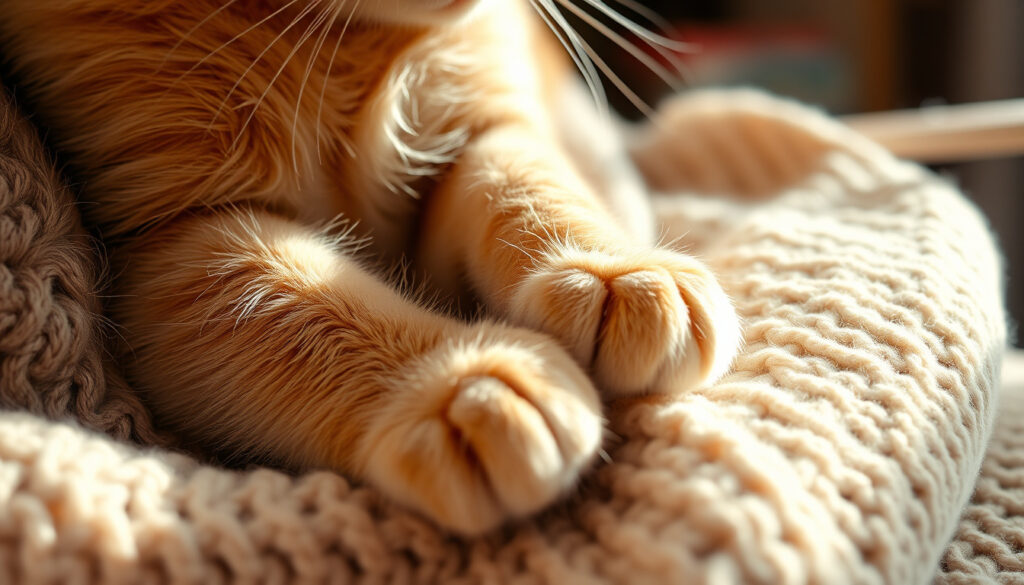
Why Do Cats Make Biscuits? The Science of Cat Kneading
There’s something oddly hypnotic about watching a cat push its paws into a soft blanket, over and over, with a far-off look that suggests pure bliss. Called “making biscuits” by anyone who has ever owned a cat, this kneading motion is one of the most common—and most misunderstood—feline behaviors. Adult cats inherited the habit from kittenhood, where the same motion helped them nurse, and it continues to serve purposes ranging from comfort to communication. By the end of this article, you’ll know exactly what your cat is saying with every paw press.
Origin of kneading: Remnant of kitten nursing behavior · Purpose: Comfort, scent marking, muscle stretching · Common triggers: Soft surfaces, petting, relaxation · Scent glands: Located between paw pads · Age of onset: Begins at birth
Quick snapshot
- Kneading originates from kittenhood nursing to stimulate milk flow (Fullwood Animal Hospital (veterinary clinic))
- Kneading on a person is a sign of trust and affection (Dix Hills Animal Hospital (veterinary practice))
- Cats have scent glands between paw pads that release pheromones (Meowingtons (cat lifestyle blog))
- Whether a cat’s emotional state during kneading is always positive—some cats knead when anxious (Meowingtons (cat lifestyle blog))
- The exact neurological pathways that trigger kneading in adult cats remain unknown (Meowingtons (cat lifestyle blog))
- Kneading begins at birth: kittens knead their mother’s belly to stimulate milk flow (Fullwood Animal Hospital (veterinary clinic))
- Female cats, especially unspayed, may knead more frequently when in heat (Dix Hills Animal Hospital (veterinary practice))
- Redirect kneading to a blanket or pillow is a commonly recommended management strategy (Dix Hills Animal Hospital (veterinary practice))
- Scolding a cat for kneading is discouraged because it is natural behavior (Dix Hills Animal Hospital (veterinary practice))
Five key facts at a glance: Kneading begins at birth, lasts 1–5 minutes per session, and targets soft surfaces such as blankets, clothing, and laps.
| Fact | Detail |
|---|---|
| Kneading begins at birth | Kittens knead mother’s belly to stimulate milk flow. (Fullwood Animal Hospital) |
| Scent glands | Located between paw pads; secrete pheromones with each push. (Meowingtons) |
| Frequency | Most domestic cats knead several times daily. |
| Duration | Sessions typically last 1–5 minutes. |
| Common surfaces | Soft blankets, clothing, stomachs, and laps. (Dix Hills Animal Hospital) |
| Purring during kneading | Often accompanies relaxed kneading and indicates contentment. (Dix Hills Animal Hospital) |
What does it mean when cats make biscuits?
The nursing instinct
- Kneading is a repetitive motion in which a cat presses its front paws alternately against a soft surface. (Fullwood Animal Hospital (veterinary clinic))
- Nursing kittens knead their mother’s belly to stimulate milk flow. (Fullwood Animal Hospital)
- Adult cats often continue kneading because the motion is associated with comfort and safety from kittenhood. (Dix Hills Animal Hospital)
Scent marking and territory
- Cats have scent glands in their paws, so kneading may deposit scent and function as territory marking. (Meowingtons (cat lifestyle blog))
- Kneading on a favorite object or person can be interpreted as the cat claiming that object or person as its own. (Meowingtons)
Self-soothing behavior
- Cats may knead to self-soothe when they are anxious or stressed. (Meowingtons)
- Kneading may be a leftover instinct from wild ancestors that pressed down grass or leaves to make a resting place. (Meowingtons)
Are cats happy when they are making biscuits?
Signs of contentment during kneading
- A common interpretation of kneading is that the cat feels happy, relaxed, or secure. (Fullwood Animal Hospital)
- Kneading may be accompanied by purring when a cat is especially relaxed. (Dix Hills Animal Hospital)
When kneading signals stress
- Some cats knead as a coping mechanism for anxiety. (Meowingtons (cat lifestyle blog))
- If the cat’s body language includes flattened ears or a tucked tail, the kneading may reflect discomfort rather than bliss.
Most cats knead when relaxed and content, but a small minority use it as a stress response. The key is the cat’s overall body language—purring and a soft posture point to happiness; tense muscles and dilated pupils may signal anxiety. (Fullwood Animal Hospital)
The implication: a relaxed cat kneading on your lap is solid evidence of a positive emotional state, but owners must read the full body language picture.
Why Does My Cat Make Biscuits on Me?
Scent marking you as part of their territory
- Kneading on a person is a sign of affection and trust. (Dix Hills Animal Hospital)
- Cats transfer their scent to claim ownership of you. (Meowingtons)
Comfort and trust
- Kneading is often described by veterinary sources as a sign that the cat trusts the person it is kneading on. (Dix Hills Animal Hospital)
Why on specific body parts (chest, leg, face, blanket)
- Soft textures (blankets, stomach) mimic mother cat’s fur. (Dix Hills Animal Hospital)
- Some cats knead on your chest because it is warm and the heartbeat is soothing.
The pattern: your cat selects the warmest, softest part of you to perform its most comforting ritual.
Why do cats make biscuits before sleeping?
Nesting instinct
- Kneading before sleep is reminiscent of preparing a nest. (Meowingtons (cat lifestyle blog))
- Kneading may be a leftover instinct from wild ancestors that pressed down grass or leaves to make a resting place. (Meowingtons)
Creating a comfortable sleeping spot
- It helps relax muscles and lower stress before resting. (Fullwood Animal Hospital)
- Cats may knead to test the softness of a surface before settling down. (Dix Hills Animal Hospital)
Why do cats make biscuits when you pet them?
Reciprocal affection
- Petting can trigger a happy memory of nursing, causing kneading. (Fullwood Animal Hospital)
- Some cats knead as a request to continue petting. (Dix Hills Animal Hospital)
Overstimulation and boundary setting
- If kneading becomes intense, it may indicate overstimulation. (Dix Hills Animal Hospital)
- Some cats drool while kneading, which can be linked to leftover nursing behavior. (Fullwood Animal Hospital)
The implication: your cat may be asking for more affection or telling you it’s time to stop—reading the intensity of the knead is key.
Clarity: Fact vs. Fiction
Confirmed facts
- Kneading is a natural instinct remaining from kittenhood. (Fullwood Animal Hospital)
- Cats have scent glands in their paw pads. (Meowingtons)
- Kneading often occurs when cats feel safe and content. (Dix Hills Animal Hospital)
What’s unclear
- Whether a cat’s emotional state during kneading is always positive—some cats knead when anxious. (Meowingtons)
- The exact neurological pathways that trigger kneading in adult cats.
Expert Perspectives
Kneading (often referred to as ‘making biscuits’) is a common behavior seen in domestic cats where the cat rhythmically alternates its front paws, pushing in and out against a soft surface. It is a natural instinct that begins in kittenhood as a way to stimulate mother’s milk during nursing.
Cats have scent glands in their paws, so when they knead on you, they are marking you with their scent—it’s a huge compliment because they are claiming you as part of their territory.
— Dr. Katrina Warren (veterinarian and pet behavior expert)
The implication for cat owners: kneading is nearly always a good sign, but context matters. A relaxed cat kneading on your lap is telling you it feels home. For the cat owner in Canada who shares a bed with a kneading cat, the choice is simple: enjoy the affection, place a blanket between you and the paws if needed, and never scold—that would undo trust built over time. For the owner with an anxious cat, the kneading might be a cue to check for stress triggers in the environment.
Related reading: **Cushing Disease in Dogs – Symptoms, Causes, Diagnosis & Treatment** · **Recipe for Banana Bread: Easy Moist Loaf with Pro Tips**
For a deeper dive into the evolutionary and behavioral reasons, check out the science behind cat kneading.
Frequently asked questions
Is kneading a sign of affection?
Yes, kneading on a person is widely considered a sign of trust and affection. (Dix Hills Animal Hospital)
Can kneading be a sign of stress?
Some cats knead as a self-soothing mechanism when anxious. (Meowingtons)
Should I stop my cat from kneading?
Scolding a cat for kneading is discouraged because it is natural behavior. Redirecting to a blanket or pillow is a commonly recommended management strategy. (Dix Hills Animal Hospital)
Why does my cat knead my blanket but not me?
Cats often choose soft textures like blankets because they mimic a mother cat’s fur. This is not a rejection—your cat may simply prefer a surface that feels more like its kittenhood nursing experience. (Dix Hills Animal Hospital)
Do all cats knead?
Most domestic cats knead, but the frequency varies. Some cats knead several times daily, while others do so less often. (Fullwood Animal Hospital)
Is kneading the same as making biscuits?
Yes, “making biscuits” is an informal term for kneading, referencing the rhythmic hand motion used to knead dough. Both describe the same alternating paw presses.
Why does my cat knead and bite at the same time?
Kneading paired with gentle biting can be a sign of overstimulation or a carryover from kittenhood when kittens would knead and suckle. If the bite is soft, it often indicates affection, but if it becomes hard, your cat may need a break. (Dix Hills Animal Hospital)
More related posts
 Big Marble Go Centre: Hours, Prices, Schedules & Amenities
 Suki from Fast and Furious – Her Car, Fate, and the ‘Bullet’ Meme
 Denver Nuggets vs Boston Celtics Match Player Stats – Box Scores & Top Performers
 Too Hot to Handle – Rules Seasons Cast Winners Guide
 140 USD to CAD – Convert US Dollars to Canadian Dollars
 What Do Hemorrhoids Look Like? Pictures Symptoms Types
 Toronto South Detention Centre: Visits, Address & Funds Guide
 Rick Ross Net Worth 2024 – $150M Fortune Breakdown
